Contact Us
- Phone: +81 78-555-0192
- Email: tidalthreads@gmail.com
- Address: 2-8-5 Sakaemachi, Nishinomiya, Hyogo Prefecture, Japan
- Working hours: 9:00AM - 6:00PM
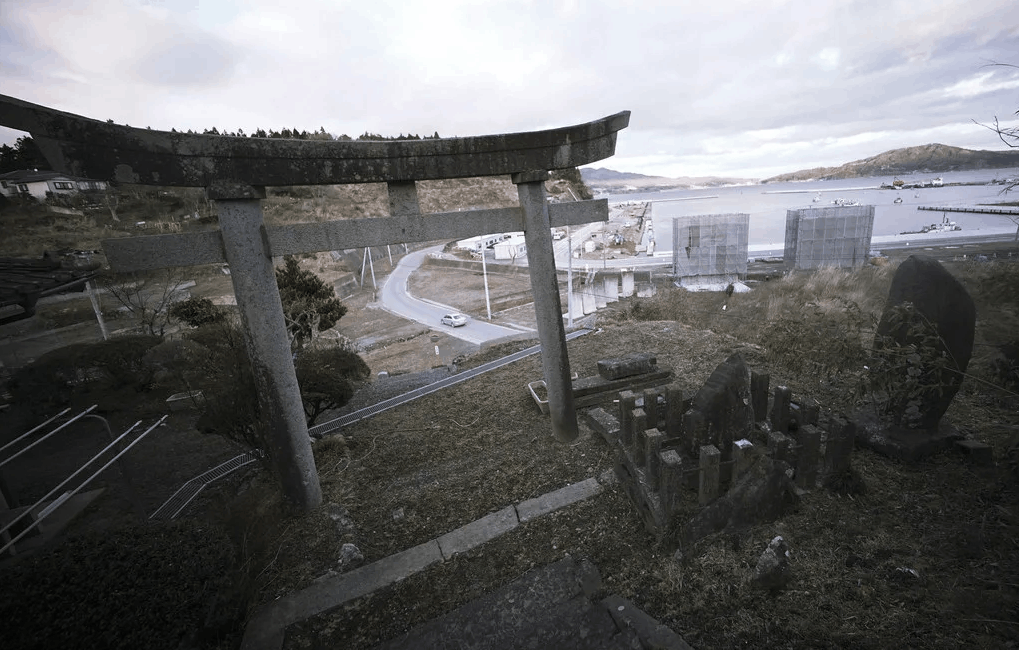
High on a hill overlooking a cluster of coastal towns, a weathered stone shrine marks the boundary between safety and catastrophe with a simple line chiseled into rock. The inscription, worn nearly smooth by wind and rain, warns future generations never to build their homes below this point, a directive paid for with the lives of ancestors swept away centuries ago. Similar markers, called tsunami ishi, dot the hillsides above Japanese ports all along the Sanriku coast, their messages a form of communication from the dead to the yet-unborn. Below them, oblivious to the ancient warnings, the fishing boats bob gently in the harbor and the bright roofs of new houses cluster daringly close to the water's edge. The tension between the wisdom of ocean traditions and the amnesia of modernity defines life on this precarious shoreline.
The most famous of these stones stands in the village of Aneyoshi, erected after a catastrophic wave in 1896 that erased the entire community save for two survivors who had fled to high ground. Its command is stark and unambiguous: "Do not build your homes below this point," a sentence that carries the accumulated authority of immeasurable suffering. When the 2011 tsunami roared toward the coastal towns of the region, the village obeyed the stone and remained intact while neighboring communities were obliterated. This ancient text, carved before the invention of modern seismology, succeeded where sophisticated warning systems failed because it was embedded in the lived maritime life of the community. The stone does not explain, does not negotiate, does not offer exceptions for convenience or economic necessity.
I climbed to the Aneyoshi stone on a gray afternoon when the sea looked deceptively calm, a flat expanse of slate stretching toward an indistinct horizon. The path wound through a forest of cedar and bamboo, the air growing cooler and quieter with every meter of elevation gained. At the clearing where the stone stands, someone had placed a bouquet of fresh flowers and a can of beer, offerings to the spirits of those who perished because earlier generations had ignored similar warnings. I sat on a mossy boulder and looked down at the Japanese ports below, the fishing boats reduced to toy-sized specks arrayed around the concrete fingers of the docks. From this vantage point, the entire history of the coastal towns was visible as a geological text written in terraces of occupation and abandonment.
The ocean traditions of the Sanriku coast encode tsunami awareness into cultural practices so seamlessly that participants barely recognize their protective function. Annual evacuation drills are disguised as festivals, with drumming and feasting that follow the routes toward high ground. Children learn songs that map the escape paths in rhyme and rhythm, their bodies conditioned to move uphill long before their minds understand the physics of displacement waves. Elders who recall the 1933 and 1960 tsunamis are given honored roles in community planning, their traumatic memories valued as data that complements the readings of tide gauges and satellite buoys. The seafood harvest festivals double as reminders of the ocean's capacity for sudden, indiscriminate violence.
Despite this deep reservoir of wisdom, the economic pressures of maritime life exert a constant downward pull toward the vulnerable shoreline. New generations of fishermen, raised in an era of sophisticated seawalls and early warning apps, have grown skeptical of the old prohibitions that seem to reflect an outdated fatalism. They want their homes close to their fishing boats, their children close to the schools, their lives close to the Japanese ports that provide their livelihoods. The tsunami stones speak a language of absolutes, but the daily reality of the coastal towns demands compromise, a negotiation between prudence and practicality that unfolds on every available square meter of flat land. The sea giveth, as the saying goes, and the sea taketh away.
I visited a small museum near the port where fragments of other tsunami stones were preserved behind glass, salvaged from the rubble of villages that had chosen to ignore their instructions. The curator, a woman whose parents had survived the 2011 wave by climbing to the roof of a community center, showed me photographs of the coastal towns before and after the water receded. The images were difficult to look at, the neat geometry of streets and houses replaced by a chaotic scrabble of splintered wood and overturned fishing boats deposited kilometers inland. She pointed to a photo of her own neighborhood and traced the path of her childhood walk to school, now a scar of barren earth, and said simply that the ocean traditions of her ancestors were not superstition but survival encoded as ritual.
As I descended from the Aneyoshi stone, the afternoon sun broke through the cloud cover and ignited the wet roofs of the village below into sheets of gold. The fishing boats were returning from their day trips, their wakes drawing white lines across the dark water of the bay. I passed a group of schoolchildren practicing the evacuation song on their way home, their voices high and sweet against the rhythm of the waves. One boy broke away from the group to pet a cat sleeping on a stone wall, and I wondered if he understood that the wall was older than his grandparents, that it had been placed there by people who knew with terrible certainty what was coming. The Japanese ports will be rebuilt, the seafood will be harvested, the maritime life will persist, but only if the warnings of the stones are honored with the same reverence as the tides themselves.